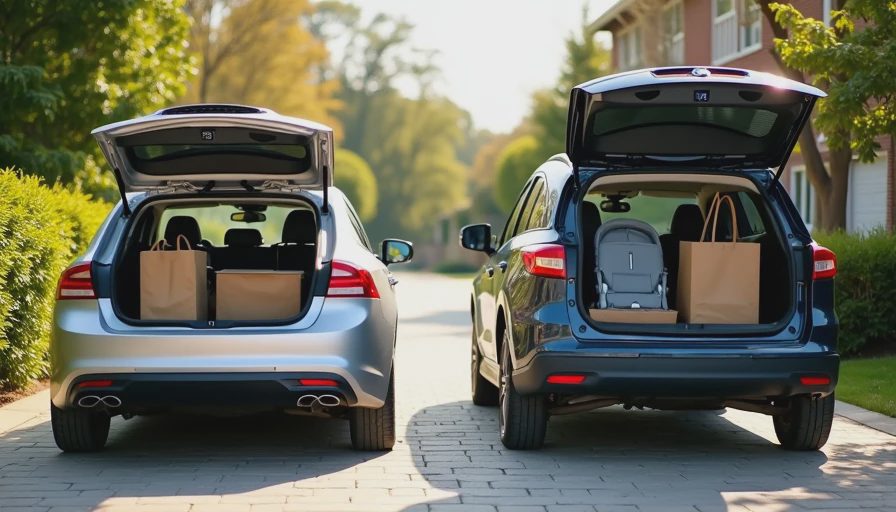
The Eternal Family Dilemma
Hey everyone, Garrett Nolan back again from Toledo. If you’ve been reading along, you know I’m the dad who helps friends avoid expensive car regrets. We’ve talked about big mistakes, true ownership costs, and proper testing. Today in Buyer’s Bench we tackle one of the most common questions I get: Should we buy a used SUV or stick with a used sedan for the family?
It’s not a simple answer. SUVs feel like the default choice for families these days—higher seating, more space, that “I can handle anything” vibe. But after helping enough people run the numbers, I’ve seen how sedans can quietly save thousands over five years. Let’s break it down honestly so you can decide what fits your actual life.
My Own SUV vs Sedan Journey
A few years back we went from a reliable sedan to a used midsize SUV when the kids started growing and sports gear exploded. The SUV made weekends easier, but I was shocked at how much more it cost to feed, insure, and maintain. That experience made me dig deeper into real ownership data from friends, neighbors, and my own notebook.
Key takeaway: The vehicle that feels right in the moment isn’t always the one that feels smart in year four.
Head-to-Head Cost Comparison Over 5 Years
Let’s get practical with 2026 numbers based on typical family driving (around 12,000–15,000 miles per year in the Midwest).
Purchase Price and Depreciation
Used Sedan (e.g., a 4–6 year old Camry or Accord, ~$15k–$20k): Depreciates slower in many cases because they’re less “trendy.”
Used SUV (similar age, ~$18k–$25k): Starts higher and often drops faster as new models flood the market.
5-year edge: Sedan usually saves $2,000–$4,000 on depreciation alone.
Fuel Costs
This is where sedans shine. A decent used sedan might average 28–35 mpg combined. A family SUV? Often 22–27 mpg.
At current fuel prices, that difference can mean $700–$1,200 extra per year for the SUV. Over five years? That’s real money that could cover a solid family vacation or new tires.
Insurance Premiums
Insurance companies love sedans for families. Lower center of gravity, cheaper parts, and better safety stats in many crash categories often translate to noticeably lower rates—sometimes $300–$600 less per year.
I ran quotes recently for a friend choosing between a popular SUV and a solid sedan. The sedan saved them almost $450 annually. That adds up fast.
Maintenance and Repairs
Sedans generally have simpler designs—less weight on suspension components, smaller brakes, and fewer complex systems.
Common SUV pain points I’ve seen:
More expensive brake jobs due to larger rotors
Higher chance of air suspension or all-wheel-drive repairs
Costlier tires (bigger sizes)
A well-maintained sedan can easily cost $400–$800 less in maintenance over five years.
Total 5-Year Ownership Math (Rough Family Example)

Sedan total: Purchase $17k + fuel $6k + insurance $5k + maintenance $3k + depreciation $6k = ~$37k
SUV total: Purchase $22k + fuel $9k + insurance $6.5k + maintenance $4.5k + depreciation $9k = ~$51k
That’s a potential $14,000 difference over five years. Mind-blowing when you see it written out.
Of course, your exact numbers depend on driving habits, location, and specific models. But the pattern holds for most families I’ve helped.
When the SUV Actually Makes Sense
I’m not anti-SUV. There are times they win:
You regularly carry three or more kids plus gear
Frequent highway trips with lots of cargo
You need higher ground clearance for snow or light trails
The peace of mind from the commanding view is worth the extra cost to you
For many families with one or two kids, though, a sedan (or even a hatchback) handles 90% of needs while keeping more money in the bank.
The Practical Tradeoffs Families Feel Daily
Sedan advantages:
Easier to park in tight lots
Better fuel economy on school runs
Lower step-in height for little kids and grandparents
Often quieter on the highway
SUV advantages:
Easier car seat access in some models
Massive cargo when you need it
Better visibility in traffic
AWD options for Midwest winters
My rule: If you can make a sedan work with smart packing and roof racks when needed, the long-term savings are hard to ignore.
Real Stories from the Driveway
Last summer I helped my cousin choose between a used SUV and a well-maintained sedan. They had two kids under 8 and did mostly city and suburb driving. We ran the five-year numbers together. They went with the sedan and used a cargo organizer plus occasional roof box for big trips. One year later they’re saving noticeably on gas and insurance, and the car still feels plenty roomy.
Another friend ignored the math and bought the bigger SUV “just in case.” He’s now complaining about the monthly fuel bill and a recent $900 repair on the all-wheel-drive system.
Questions to Ask Before You Decide
How much real cargo do we need on a typical week?
What’s our actual annual mileage and mix of city/highway?
How important is easy parking and fuel savings vs. that big-vehicle feeling?
Can we add roof racks or cargo trays to make a sedan work?
Have we researched the specific model years for both options?
Run these through your family’s reality. Don’t let marketing or neighbors’ choices pressure you.
Building Your 5-Year Decision Framework
Forget the “bigger is always better” myth. Create a simple comparison sheet:
List your must-have features
Estimate real costs for both options
Test both vehicles with full family load
Sleep on the numbers for 48 hours
The goal isn’t to pick the “winner” in some magazine comparison. It’s to pick the one that keeps your family budget healthier while making daily life smoother.
Don’t shop the test drive. Shop the next five years.
Your Next Smart Move
Whether you lean sedan or SUV, the key is knowing the real tradeoffs instead of guessing. Next time you’re comparing listings, run the five-year math first. Your wallet and your future self will thank you.
What’s your current dilemma—SUV or sedan? Drop your situation in the comments and I’ll share thoughts based on what I’ve seen work for other families.
We’ll keep digging into practical buying logic in the next Buyer’s Bench post. Until then, drive smarter and own calmer.
No comments yet.